
Everything Can’t Be a Priority. Here’s How Smart Marketing Leaders Choose.
There’s a particular kind of exhaustion that comes not from doing too little, but from doing too much or having the wrong mix of collective team skills.. Unfortunately, most marketing and event leaders know it well.
The year starts with a clear plan. Strong goals. A calendar that looks ambitious but manageable. Then, somewhere between Q1 kickoffs and the first major program, the plan starts bending under the weight of competing priorities, and leaders find themselves making decisions not from strategy, but from pressure.
The goals rarely change. The resources rarely grow. What changes is how much harder it becomes to do both justice.
If that tension feels familiar, you’re not behind the curve. You’re in the middle of it, along with most of your peers. The difference between leaders who stay in reactive mode and those who break out of it isn’t resources, it’s how they make decisions about allocation of resources.
That’s what this conversation is really about. Join a conversation with peers and learn how they solve problems.
The Pressure Is Real and It’s Not Going Away
It’s tempting to frame resourcing challenges as a team problem or a planning problem. But the data suggests something more systemic.
Gartner’s 2025 CMO Spend Survey found that marketing budgets have flatlined at 7.7% of company revenue, down from 9.1% in 2023, and 59% of CMOs say they don’t have sufficient budget to execute their stated strategy. That gap between expectation and resource isn’t a rounding error. It’s a defining condition of how marketing organizations are operating right now.
The human cost is just as striking. Marketing Week’s 2025 Career & Salary Survey of more than 3,500 marketers found that 58% felt overwhelmed over the past year. Teams are running at capacity, or past it and the margin for error has nearly disappeared.
Understanding this as a structural challenge rather than a personal one matters, because structural problems require structural solutions. Hustle and goodwill are not a resourcing strategy.
Where Smart Teams Get Tripped Up
When capacity tightens, it’s tempting to try to hold everything together. Nobody wants to be the one who says “we can’t do this.”
So teams stretch. They take on more than they realistically can execute well, and quality suffers across the board.
Even experienced leaders fall into patterns that quietly undermine their effectiveness. The challenge isn’t usually a lack of talent or effort, it’s the absence of the right frameworks for making hard calls.
The everything-is-urgent trap. When every initiative carries equal urgency, the word “priority” loses its meaning, and so does your team’s focus. Research from Booz & Company found that organizations focused on fewer, well-defined priorities are 16% more likely to rank in the top tier of their industry than those spreading resources too thin.
The in-house bias. There’s an organizational instinct to solve every problem internally, even when a specialized external partner would deliver faster, better results at lower total cost, and with expertise your team simply can’t sustain at scale.
Skipping the retrospective. Every program generates insight, but when teams are already pivoting to the next deliverable, inefficiencies don’t just repeat, they compound, and each cycle starts from roughly the same place with roughly the same friction.
How the Most Effective Leaders Think Differently
What separates high-performing marketing leaders isn’t access to more resources, it’s how they make decisions with what they have.
And increasingly, the ones pulling ahead aren’t just making smarter internal decisions. They’re actively learning from peers who’ve navigated the same constraints, because borrowed experience can be one of the most underutilized advantages.
They get honest about where the real gaps are, not just capacity, but skills. Rather than stretching the existing team to cover ground it isn’t equipped for, they identify those gaps early and make deliberate decisions about how to fill them, whether that’s training, hiring, or bringing in outside expertise.
They make tradeoffs explicitly rather than letting them happen by default. Because choosing what to de-prioritize is just as strategic as choosing what to pursue, and a function that does fewer things with full conviction will always outperform one that does many things at half capacity.
They build flexible resourcing models, keeping core employees focused on strategy and institutional knowledge, while bringing in specialized external partners for management, execution and scale. The key is vetting those partners well enough that they add real value rather than just complexity.
They institutionalize learning. After major programs, they ask the harder questions, where did we underestimate, what would we resource differently. So each initiative becomes a building block for better planning, not just a completed task.
What You’ll Hear from Peers Who’ve Been There
On March 13 at 11am PT, Crawford Group is gathering a panel of senior marketing and event leaders from professional services and tech organizations for a live webinar: Smart Strategies for Stretched Teams: Guidance From Marketing & Events Leaders.
These are practitioners who’ve navigated the same constraints you’re facing, limited budgets, compressed timelines, shifting priorities, skillset gaps amongst employees, and made real calls about how to respond.
They’ll share how they identified the resourcing pain points that were quietly costing them the most, how they made prioritization decisions when everything felt equally critical, and how they built a talent mix that could flex with their needs.
They’ll also share something less common: the specific questions they’ve learned to ask when evaluating potential agency partners, the ones that separate a productive long-term relationship from an expensive lesson. Reserve your spot here.
Why This Conversation Matters Right Now
The leaders who will come out ahead in this environment aren’t necessarily the ones with the largest budgets. They’re the ones who’ve learned to make crisper decisions, build more adaptive teams, and stop waiting until they’re already behind to ask for help.
Peer learning accelerates that development faster than almost anything else. When someone who has faced your exact challenges shares what they actually tried, including what didn’t work, that’s not inspiration. It’s a competitive advantage.
Join the Conversation
If you’re ready to move from reacting to resourcing with intention, this conversation is worth an hour of your time.
More like this
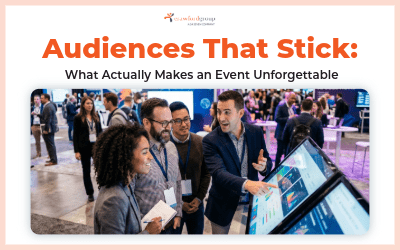
Audiences That Stick: What Actually Makes an Event Unforgettable
What makes an event truly unforgettable? Crawford Group’s Audiences That Stick webinar explored how event leaders are rethinking engagement, personalization, AI, ROI, and shared experiences to create moments audiences remember long after the event ends.
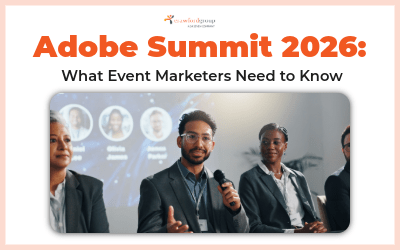
Adobe Summit 2026: What Event Marketers Need to Know
Adobe Summit 2026 revealed a major shift in event marketing: AI execution is now the priority, but authentic customer stories, personalized experiences, and actionable content are what truly drive engagement. Crawford Group shares the key trends event marketers need to know to create more impactful conferences, executive programs, and customer experiences in 2026 and beyond.

