4 Ways to Engage Employees
Every town hall and offsite asks employees to invest time and attention. The return should be clear: a better understanding of company priorities, an opportunity to contribute, and a practical sense of what happens next.
Delivering that value requires deliberate choices. Which messages deserve live discussion? Where do employees need more context? What challenges would benefit from bringing people together?
These questions shape the event’s purpose. They also help teams make decisions about the agenda, the employee experience, and the work that continues afterward. Without clear answers, even a polished event can leave employees unsure about what the conversation means for them.
Here are four ways to build internal events that create clarity, strengthen working relationships, and support action.
1. Define the Outcome Before You Build the Agenda
Before inviting speakers or collecting slides, agree on what employees should leave understanding or prepared to do.
For a strategy town hall, that might mean understanding the three priorities that will guide next quarter’s work and how those priorities affect team decisions. For an offsite, it could mean agreeing on how two departments will address a shared operational challenge.
That level of specificity gives planners a basis for making tradeoffs. It helps determine which topics deserve time, which speakers need to contribute, and what can be communicated before the event.
The need for focus and clarity is substantial.
Gallagher’s 2026 Employee Communications Report found that 83% of surveyed communications and HR professionals considered information overload a growing problem.
Use the event’s intended outcome to guide speaker preparation. Ask leaders to explain why a decision was made, what it changes, and how employees should apply it. Where decisions are still developing, be clear about what is known and when employees can expect more information.
A focused agenda gives each contribution a job to do. It also makes it easier to protect time for the conversations employees need most.
2. Give Employees a Meaningful Role in the Conversation
Participation deserves the same planning discipline as presentations.
Decide beforehand where employee input will be useful, how people will contribute, and what the conversation should produce.
Encore and Boldpush’s 2026 Experience Design Report, based on responses from event professionals, identifies roundtables and hands-on workshops as leading formats for attendee satisfaction. These formats give people a reason to exchange perspectives and work together.
At an offsite, bring colleagues from different teams together around a specific question: “Where does our handoff process slow down, and what could we change?”
Give the group enough context to examine the problem and a facilitator who can keep the discussion focused. Define a useful output: one improvement to test, a person responsible for coordinating it, and a date to review the results. That turns a broad conversation about collaboration into a practical next step.
For a town hall, collect questions in advance and reserve enough live time to explore the issues behind them. A moderator can identify recurring concerns, ask follow-up questions, and help leaders address what employees actually need to understand.
And protect breaks with equal care.
In Hilton’s Why We Gather research, 67% of respondents said they felt less engaged at events without downtime.
Leave room for people to continue a conversation, connect with a colleague, or recharge without missing planned content. Those moments deserve a place in the schedule.
3. Design for Every Way Employees Will Attend
Employees may experience the same event from a conference room, a laptop, or a recording watched between shifts. Each setting requires a workable way to receive information and contribute questions.
That deserves attention early in planning.
Appspace’s 2026 workplace research found that 72% of surveyed U.S. and U.K. employees had felt out of the loop on important workplace updates during the previous year. Internal events are one opportunity to address that disconnect.
Walk through the experience from three perspectives: someone attending in person, someone joining remotely, and someone watching afterward. For each, ask: Can they understand the content? Can they ask a question? Will they know where to find an answer?
Build the plan around those needs. For teams across time zones or shifts, consider a second live session or a recording paired with a clear channel for questions. Share accessible materials in advance and provide captions.
During a hybrid event, assign a moderator to monitor remote participation and bring those questions into the discussion. Make sure questions asked in the room are audible to everyone joining online.
For employees watching later, include the question channel and response timeline alongside the recording. Their opportunity to participate should remain clear even after the live event has ended..
4. Make Follow-Through Part of the Event Plan
A productive discussion creates expectations. Employees need to know which decisions were made, which questions remain open, and who is responsible for moving the work forward.
ContactMonkey’s 2026 Global State of Internal Communications Report identifies inconsistent follow-through on employee feedback and difficulty demonstrating impact as continuing challenges. Both belong in the planning conversation.
While the agenda is still taking shape, assign responsibility for the recap, unanswered questions, and agreed actions. Establish when employees will hear back and where updates will appear.
After the event, share a concise record of the key decisions and next steps. Give each action an owner and a target date. Where an answer is still pending, explain who is working on it and when the next update will come.
Equip managers to continue the conversation with their teams. A short briefing and a few focused discussion prompts can help employees connect company priorities to their own responsibilities, surface remaining confusion, and identify decisions that need further guidance.
Then evaluate the event against the outcome defined at the start. Pair attendance and satisfaction data with questions that reveal whether the event accomplished its purpose.
After a strategy town hall, can employees identify the priorities and explain what those priorities mean for their work? A few weeks after an offsite, has the group tested its proposed improvement? What happened, and what needs to change?
Use those answers to guide the next conversation. When employee feedback leads to a decision or adjustment, communicate that connection. Follow-through gives people evidence that their participation matters.
Planning your next town hall or offsite? Connect with Crawford Group to define the outcomes that matter and build the strategy and execution plan to support them.
More like this
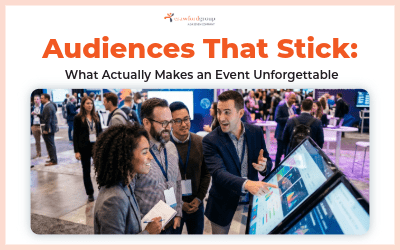
Audiences That Stick: What Actually Makes an Event Unforgettable
What makes an event truly unforgettable? Crawford Group’s Audiences That Stick webinar explored how event leaders are rethinking engagement, personalization, AI, ROI, and shared experiences to create moments audiences remember long after the event ends.
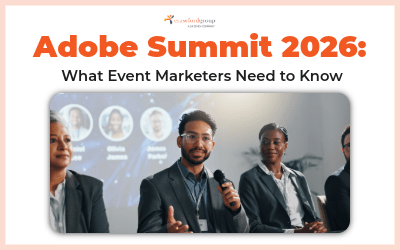
Adobe Summit 2026: What Event Marketers Need to Know
Adobe Summit 2026 revealed a major shift in event marketing: AI execution is now the priority, but authentic customer stories, personalized experiences, and actionable content are what truly drive engagement. Crawford Group shares the key trends event marketers need to know to create more impactful conferences, executive programs, and customer experiences in 2026 and beyond.